NFC vs Paper Business Cards: Cost Per Lead
Are NFC business cards cheaper than paper? Compare real costs, qualified leads and a worked example without assuming taps equal conversions.
Updated 25 October 2026
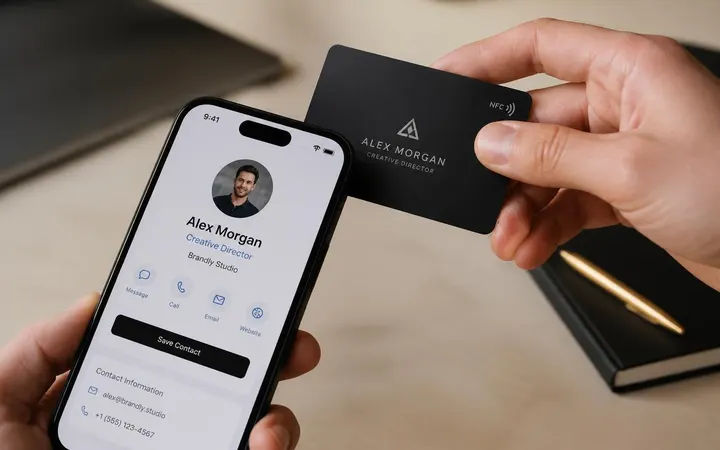
NFC business cards vs paper cards: how to compare cost per lead
Short answer: An NFC business card can reduce repeat printing costs because the same physical card can share an editable contact page many times. But neither NFC nor paper automatically produces more leads. Cost per lead depends on the number of qualified contacts you actually gain, not the number of taps, scans or cards handed out.
What counts as a lead?
For a fair comparison, define a lead as a prospect who has agreed to be contacted or has made a meaningful business enquiry. A scan or tap is an interaction, not a verified lead. Recipients may view a contact page without saving the details or following up.
Cost per lead = total relevant cost ÷ number of qualified leads.
Include printing, hardware, any software subscription, design and other costs that are relevant to your campaign. Use the same time period and definition of a lead for both formats.
Worked example: illustrative figures, not conversion benchmarks
Suppose a business spends £40 on paper cards and receives 10 qualified leads. Its cost per lead is £4.00.
Suppose the same business buys a Taproo PVC NFC business card for £19.99 and receives 10 qualified leads during the same period. Its hardware-only cost per lead is approximately £2.00. If it receives only two qualified leads, that rises to approximately £10.00.
These are hypothetical calculations, not observed Taproo conversion rates. They exclude optional subscriptions, shipping, design and other campaign costs. The number of leads must be measured rather than assumed.
What changes when you use an NFC card?
- Reusable hardware: A single card can be presented at multiple meetings without handing it away.
- Editable contact page: When the card opens a supported Taproo-hosted page, you can update contact details without reprinting the NFC hardware.
- Device compatibility: Recipients need a compatible NFC-capable phone for tapping. Where the product includes a printed QR code, scanning can offer an alternative.
- Recipient choice: Opening a page does not automatically save a contact or submit a lead.
- Ongoing costs: Review the current Taproo pricing and product details to understand allowances and any additional charges.
Paper cards still have advantages: they can be left with a recipient, require no phone to read and may suit particular audiences or events.
Which Taproo business card should you compare?
Taproo offers a black PVC NFC business card, a metal NFC wallet card and an eco-wood NFC card. Prices and options are shown on the live product pages.
You can also start with a hosted digital business card or vCard generator before buying hardware.
How to measure results fairly
- Record your total spend on each format over the same period.
- Count qualified enquiries or opted-in contacts, not just NFC taps.
- Compare cost per qualified lead and subsequent customer conversions.
- Ask recipients whether the sharing method was convenient.
- Reassess after enough interactions to avoid conclusions from a tiny sample.
Frequently asked questions
Are NFC cards always cheaper than paper?
No. A reusable NFC card may save printing costs, but its cost per qualified lead depends on how many useful contacts it generates and any ongoing expenses.
Does tapping automatically add my details to someone's contacts?
No. A Taproo NFC card opens the configured web destination on a compatible phone. The recipient can choose whether to save the contact.
Can I change my details after ordering?
If the NFC card points to an editable Taproo-hosted contact page, supported details can be changed in that page without replacing the card.
Can an NFC card work without NFC?
The NFC chip requires compatible hardware. A printed QR code, where included, can provide a camera-based alternative.
Next step
Compare the Taproo NFC business card range and membership plans, then test which format produces qualified leads for your business.
Get started with Taproo
Smart NFC tags and QR codes that point at pages you can edit any time — no reprinting.