NFC Tags for Product Authentication: Security Limits
Can NFC tags verify genuine products? Understand tamper evidence, cloning risks and when standard NFC stickers are not enough for authentication.
Updated 25 October 2026
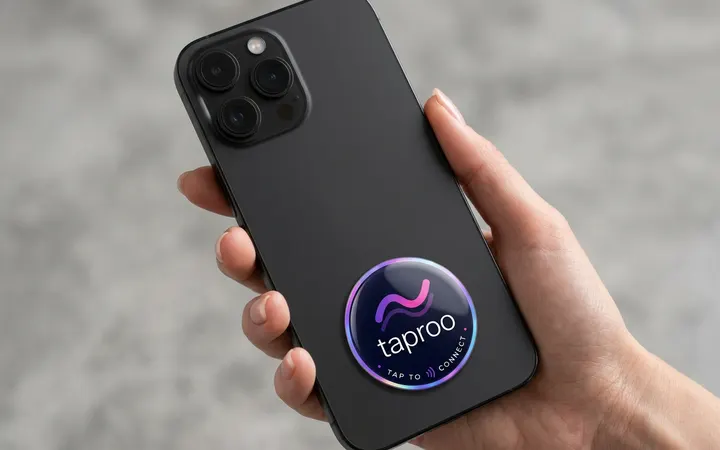
Can Taproo NFC tags be used for tamper-evident product authentication?
Short answer: NFC tags can help shoppers open product information or a verification page, but an ordinary programmable NFC sticker is not automatically tamper-evident, clone-resistant or proof of authenticity. Taproo's standard anti-metal epoxy sticker is designed for NFC performance on suitable surfaces; its listing does not establish a destructible seal or cryptographic authentication capability.
What can an NFC sticker do?
An NFC tag can contain a URL that opens product information, a serial-number lookup or another configured destination. A Taproo anti-metal epoxy NFC sticker is one physical option for linking to a page, including on suitable metal surfaces. The page's contents may be editable, depending on the configured Taproo experience.
A URL alone does not prove that a physical product is genuine. A standard tag's URL may be copied, and a tag that stays intact when removed cannot reliably show whether packaging has been opened.
What does genuine product authentication require?
- Tamper evidence: Packaging or a label engineered and tested to show visible damage when removed. Do not assume a normal epoxy or adhesive NFC tag provides this.
- Clone resistance: A suitable security architecture, potentially including cryptographic NFC chips and server-side verification. Standard programmable tags are not equivalent to cryptographic anti-counterfeit chips.
- Unique identity: A reliable way to associate each physical item with its digital record and to detect duplicate or suspicious scans.
- Clear consumer messaging: Explain exactly what a successful scan verifies and what it does not verify.
- Testing: Validate the chosen tag, adhesive, surface and operating environment before production use.
Which Taproo products are relevant?
For product information links, explore the anti-metal epoxy NFC sticker, custom-printed NFC sticker and NTAG213 wet inlay sticker. They are options for connecting a physical item to a URL; none should be marketed as tamper-proof authentication hardware without a separately verified specification.
For a true anti-counterfeit or tamper-evident project, ask your hardware supplier for documented destructible-label behaviour, chip security features and independent test evidence before selecting a tag.
Frequently asked questions
Are Taproo epoxy NFC stickers tamper-proof?
The current product listing does not verify tamper-evident destruction on removal. Treat the product as an NFC link tag, not a security seal.
Can a standard NFC tag prevent copying?
Do not assume so. A URL on a standard programmable NFC tag can be reproduced. Stronger anti-cloning protection requires a specifically designed verification system.
Can NFC tags show product details?
Yes. A compatible phone can open a configured page with product information. Whether it proves authenticity depends on the backend and security controls, not on the NFC tap alone.
Do NFC tags work on metal?
Metal can interfere with standard NFC tags. An anti-metal design is intended to improve performance on suitable metal surfaces; follow the individual product specifications.
Next steps
Browse Taproo NFC tags for product-information applications. If your goal is tamper evidence or cryptographic authentication, specify those security requirements before purchasing hardware.
Get started with Taproo
Smart NFC tags and QR codes that point at pages you can edit any time — no reprinting.